


Concealed Same-Floor Drainage Solution by Zhongcai
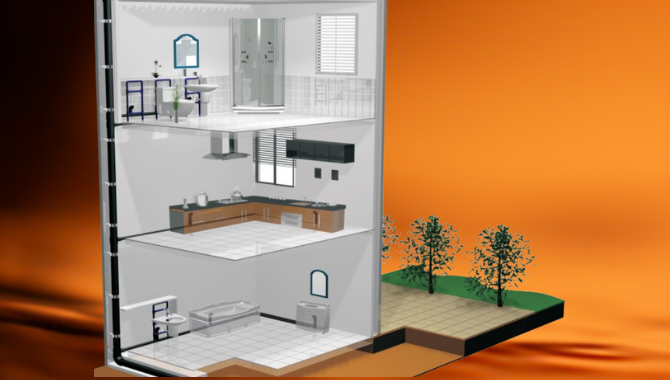
Zhongcai has introduced a concealed same-floor drainage solution that involves concealing all drainage pipes, toilet cisterns, and sanitary fixture mounting brackets by constructing an additional hidden wall or embedding them within existing walls. This innovative design allows for the centralized connection of all drainage pipes to the same-floor vertical pipe at a designated location, ensuring a seamless integration with the surrounding wall. The concealed same-floor drainage solution by Zhongcai provides a discreet and aesthetically pleasing installation for efficient and functional drainage systems.
Versatile Solution for Wall-Drain and Floor-Sink Systems
The HDPE Same-floor Drain system can be utilized for both wall-drain-type same-floor systems and floor-sink-type same-floor systems. When used in a floor-sink-type same-floor system, the installation procedure is the same as that of PVC floor-sink-type systems. However, the wall-drain-type system differs from the previous system in that it requires an additional virtual wall after the toilet. This special room, with a width of 0.2 meters, is necessary for the installation of the piping system.
| Butt Welding Surface Thickness(mm) | |||||
| Nominal Outer Diameter | 32~75 | 90 | 110 | 125 | 160 |
| Butt Welding Surface Thickness(mm) | 3 | 4 | 5 | 5 | 7 |
HDPE Same-Floor Drainage System Features

The HDPE pipes, with their exceptional qualities, are capable of withstanding the corrosive effects of strong acids and alkali, even within a wide pH range spanning from 2 to 12. Moreover hey exhibit excellent impact resistance and flexibility.

The pipes have strong resistance to underground movement, significantly enhancing the reliability of the drainage system. They are resistant to cracking, leakage, and the welding joints . They can withstand negative pressures of 800 bar or more.

The smooth inner surface of the HDPE pipes not only prevents clogging but also enhances their wear resistance. The self-cleaning property reduces pressure loss and energy consumption during water transportation.

Lightweight and easy to transport, these pipes are ideal for high-altitude operations. They offer easy and reliable connection options. With a temperature resistance ranging from -20°C to 70°C, they can be installed in cold environments without any issues.
Comparison Between Interlayer and Same-floor Drainage
| Comparison Between Interlayer Drainage and Same-floor Drainage | ||
| Criteria | Inter-floor Drainage | Same-floor Drainage |
| Drainage Noise | Loud | Low |
| Leakage Risk | Prone to leakage | Leak-proof |
| Maintenance Access | Accessible from lower floor | Accessible from the same floor |
| Water Conservation | Wasteful | Efficient |
| Bathroom Space Utilization | Low utilization | High utilization |
| Bathroom Design Style | Conventional | Personalized |
| Property Ownership | Unclear | Clear |
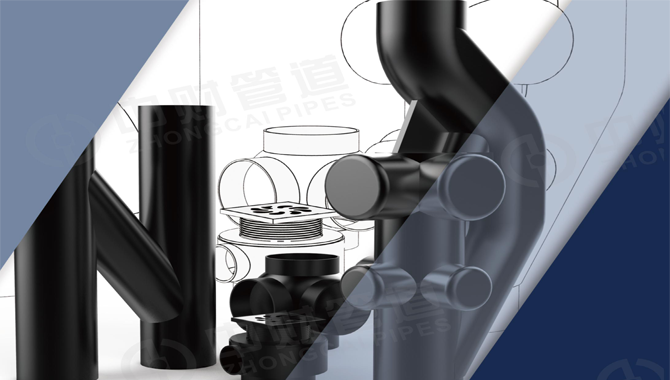
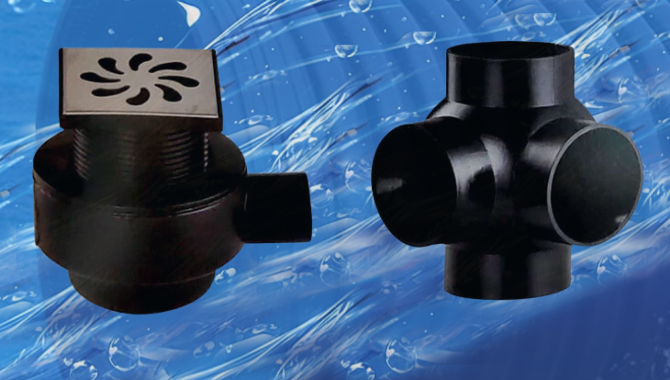
Main Methods of Same-Floor Drainage
- Concealed Same-Floor Drainage: In this method, the pipes and drainage equipment are installed within the lowered floor. It is also known as concealed same-floor drainage. The pipes and equipment are concealed within the structure, providing a seamless and integrated appearance.
- False Wall Same-Floor Drainage: In this method, the pipes and drainage equipment are laid within a false wall. This approach allows for the concealment of the pipes and equipment behind the wall, resulting in a neat and aesthetically pleasing design.
- Raised Same-Floor Drainage: In this method, the pipes and drainage equipment are installed within a raised floor. However, this method is less commonly used due to the risk of “internal water overflow.”
These are the main methods of same-floor drainage, each chosen based on specific requirements and considerations.
Introduction to HDPE Pipe System Compostion
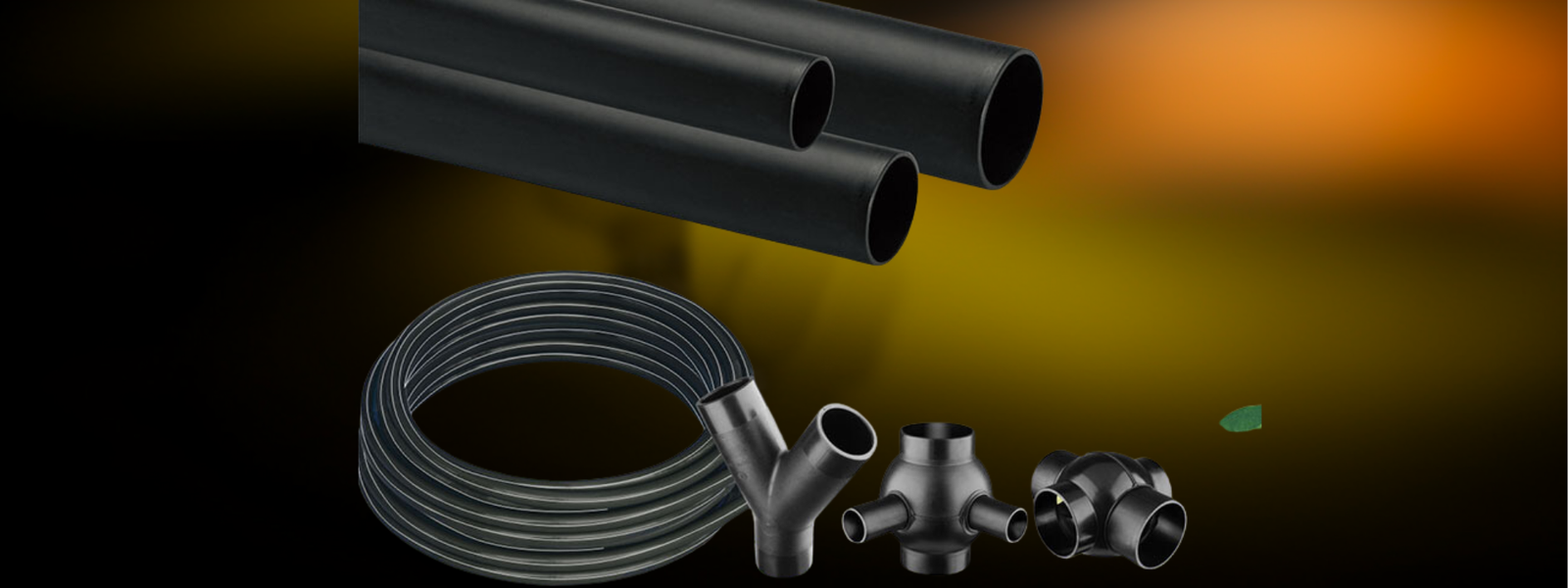
The Concealed Same-Floor Drainage System mainly consists of an HDPE pipe system and a concealed cistern system.
Zhongcai uses high-quality HDPE materials for the production of pipes and fittings. Compared to traditional drainage pipe materials, HDPE exhibits better characteristics such as impact resistance, corrosion resistance, reliable connections, and resistance to aging.
Electrofusion Coupling Connection:
· Clean the welding pipe and use a scraper to remove any oxidation on the surface of the inserted section of the pipe.
· Use a tape measure to determine the length of the centerline position of the electrofusion coupling and mark it on the pipe using a marker pen.
· Connect the power supply and begin the welding process. When two small holes above the observation hole on the electrofusion coupling surface extend by 2 to 3mm, it indicates a successful connection.
· After the welding is completed, allow it to cool naturally.
Please note that this is a general translation and may require further context for accuracy.
More Advantages for HDPE Same Floor Pipelines
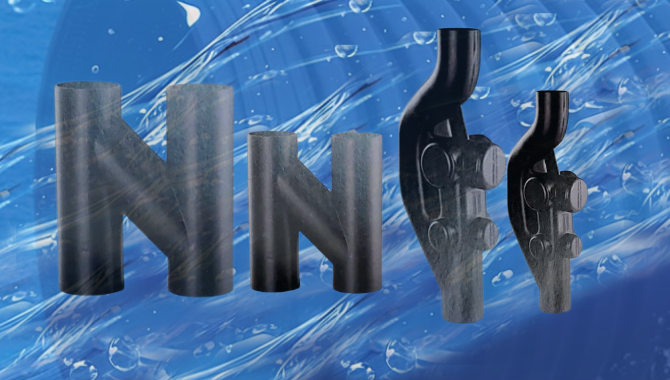
- HDPE pipes resist corrosion from strong acids and alkalis (pH 2-12) and exhibit excellent impact resistance and flexibility.
- They demonstrate strong resistance to ground movement, enhancing drainage system reliability. They are crack-resistant, leak-proof, and have strong welding joints.
- The smooth inner surface of the pipes prevents blockages, ensures wear resistance, and possesses self-cleaning properties to reduce pressure loss and energy consumption during water transport.
- These lightweight pipes are easily transported and suitable for high-altitude operations. They allow for easy and reliable connections and can be installed in temperatures ranging from -20°C to 70°C.
- HDPE pipes are cost-effective, long-lasting, and designed with a rational approach. The inclusion of 2-2.5% uniformly distributed carbon black enables UV resistance.
| Ominal Outside Diameter | Electrofusion Coupling Outside Diameter | Insertion Depth |
| 50 | 62 | 20 |
| 63 | 76 | 20 |
| 75 | 89 | 25 |
| 90 | 104 | 25 |
| 110 | 125 | 28 |
| 160 | 178 | 28 |
- Secure the corresponding fittings in the clamping device, aligning them in a straight line.
- Carefully position the fittings on the cutting plate and cut the pipe end until it is completely flat and clean. Close the two fittings and check if the cut surface is correct.
- Use a heating plate to melt the pipe end until the welding surface protrudes to the required size.
- Carefully bring the two fittings together with the required welding pressure. The pressure test should meet the specified welding time range. Allow the joint to cool naturally, and avoid using cold water or other coolants to accelerate the cooling of the HDPE pipe.
Please note that this is a general translation and may require further context for accuracy.
 English
  Русский
  Español
  Français
  Português
  Tiếng Việt